What Farmers Should Consider When Replacing Greenhouse Film
Learn what farmers should consider when replacing greenhouse film, including thickness, UV resistance, light transmission, thermal properties, dimensions, and supplier selection.
Nov 25th,20262 Visualizzazioni
What Farmers Should Consider When Replacing Greenhouse Film
Greenhouse film plays an important role in protecting crops and maintaining suitable growing conditions. Over time, exposure to sunlight, wind, rain, temperature changes, and other environmental factors can affect film performance. Replacing old greenhouse film at the right time helps farmers maintain a more stable growing environment and avoid unnecessary production losses.
However, choosing replacement greenhouse film involves more than simply purchasing a new plastic cover. Farmers need to consider local climate conditions, crop requirements, film thickness, light transmission, UV resistance, and installation requirements.
This guide explains the key factors farmers should evaluate when replacing greenhouse film.
1. Evaluate the Condition of Existing Greenhouse Film
Before selecting replacement film, farmers should inspect the condition of the existing greenhouse covering.
Common signs that greenhouse film may need replacement include:
Visible cracks, tears, or holes
Reduced transparency due to aging or surface contamination
Changes in flexibility and mechanical strength
Damage caused by wind or severe weather
Reduced performance in maintaining the greenhouse environment
Farmers should also review how long the existing film has been in use and whether it has experienced repeated repairs.
An inspection helps determine whether the entire greenhouse covering needs replacement or whether only certain sections require attention.
2. Choose Film Thickness According to Greenhouse Requirements
Film thickness is one of the most important considerations when purchasing replacement greenhouse film.
Different greenhouse structures, weather conditions, and agricultural applications may require different thickness specifications.
When evaluating thickness, farmers should consider:
Local wind and weather conditions
Greenhouse structure and support spacing
Expected service life
Installation methods
Crop protection requirements
Thicker film may provide greater resistance to certain mechanical stresses, but thickness alone does not determine overall durability. Resin quality, film formulation, manufacturing consistency, and installation conditions also matter.
The best choice is a specification that matches the greenhouse structure and local growing environment.
3. Consider Light Transmission for Different Crops
Light transmission directly influences the growing environment inside a greenhouse. Different crops have different light requirements, so farmers should select greenhouse film according to their cultivation plans.
Important factors include:
Light Transmission: Suitable light transmission helps provide the natural light required for crop growth.
Light Diffusion: Diffused light can help distribute sunlight more evenly throughout the greenhouse.
Transparency: Clear film may be suitable for applications where high direct light transmission is preferred.
Farmers should compare the optical properties of different greenhouse films rather than choosing materials based only on appearance.
4. Check UV Resistance and Outdoor Durability
Greenhouse film is exposed to ultraviolet radiation throughout its service life. UV exposure can gradually affect the physical properties of plastic materials.
UV-stabilized greenhouse film is designed to improve resistance to outdoor aging under specified conditions.
Before ordering replacement film, farmers should ask suppliers about:
UV stabilization technology
Expected service life under specified conditions
Resistance to outdoor weather exposure
Recommended installation and maintenance practices
Product testing and technical specifications
Actual service life depends on factors such as sunlight intensity, regional climate, film formulation, installation tension, and agricultural chemicals used inside the greenhouse.
For this reason, farmers should choose film based on local environmental conditions rather than relying on a general lifespan estimate.
5. Evaluate Thermal and Moisture Management Properties
Temperature and moisture management are important aspects of greenhouse cultivation.
Different greenhouse film formulations may provide different thermal and condensation-control characteristics.
For example:
Anti-drip properties can help reduce water droplet formation on the inner film surface.
Anti-fog properties can help reduce condensation-related visibility issues.
Thermal properties can influence heat retention and temperature fluctuations.
Proper ventilation remains essential for managing humidity and temperature.
Farmers should consider the local climate, crop sensitivity, and greenhouse ventilation system when selecting these functional properties.
Not every greenhouse requires the same combination of features.
6. Confirm Film Width and Installation Compatibility
Even high-quality greenhouse film may create installation problems if its dimensions do not match the greenhouse structure.
Before placing an order, farmers should measure the greenhouse carefully and confirm:
Greenhouse length and width
Roof structure and covering dimensions
Required film width
Film roll length
Installation and fastening methods
Allowance for overlapping and securing the film
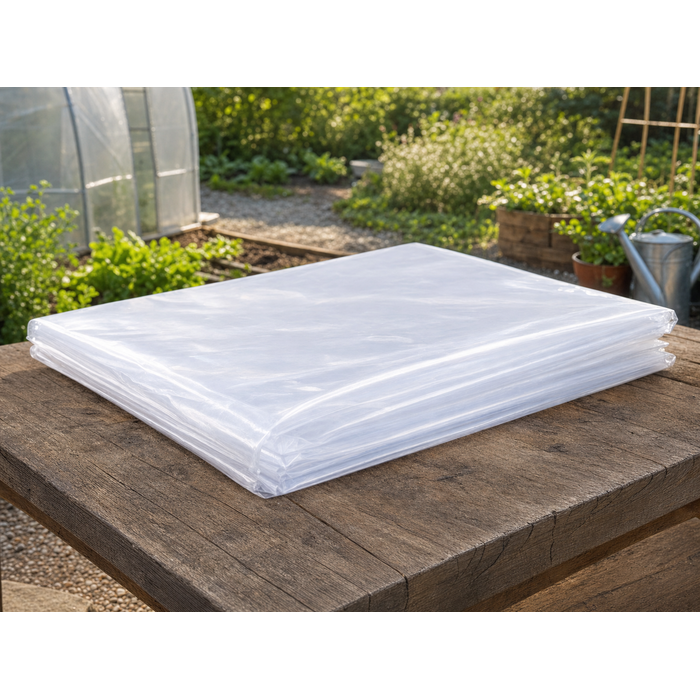
Customized PE greenhouse film can help accommodate different greenhouse designs and reduce unnecessary material waste.
Accurate measurements also make transportation, installation, and inventory planning easier.
7. Compare Film Quality Beyond the Purchase Price
Price is an important consideration, especially for farms managing multiple greenhouses. However, selecting replacement film based only on the lowest quotation may lead to higher long-term costs.
Farmers should compare suppliers based on:
Raw material quality
Film thickness consistency
Light transmission performance
UV stabilization
Mechanical strength
Available functional additives
Manufacturing quality control
Technical support and delivery reliability
It is also useful to request product samples or technical specifications before confirming a large-volume purchase.
A suitable greenhouse film should balance initial purchasing costs with expected performance under actual growing conditions.
8. Plan Greenhouse Film Replacement Before the Growing Season
Replacement timing can influence both installation efficiency and agricultural production schedules.
Farmers should plan film replacement according to local planting calendars and weather conditions.
Before starting the replacement process, consider:
Crop planting and harvesting schedules
Seasonal weather patterns
Availability of installation labor
Film production and delivery lead times
Greenhouse cleaning and structural inspection
Preparing in advance helps reduce unexpected delays and allows farmers to complete installation before the next growing cycle.
9. Work with a Reliable Greenhouse Film Manufacturer
Selecting a reliable supplier is essential when purchasing greenhouse film for agricultural projects.
An experienced PE film manufacturer can help farmers evaluate material specifications and identify suitable solutions based on greenhouse dimensions and growing conditions.
When communicating with a supplier, provide the following information:
Greenhouse dimensions
Local climate conditions
Main crops being cultivated
Required film thickness and width
Desired UV and functional properties
Estimated purchasing quantity
These details allow manufacturers to provide more accurate product recommendations and quotations.
Conclusion
Replacing greenhouse film is an important part of maintaining a suitable agricultural growing environment. Farmers should evaluate existing film conditions, thickness, light transmission, UV resistance, thermal properties, dimensions, and supplier reliability before making a purchasing decision.
The right greenhouse film should match local climate conditions, greenhouse structure, and crop requirements rather than simply follow a standard specification.
NAIGU Films specializes in PE and PVC film manufacturing, providing customized plastic film solutions for agricultural, industrial, mattress, and furniture applications. With more than 15 years of experience in plastic film production, we support bulk buyers with flexible specifications and application-oriented material recommendations.
Looking for replacement greenhouse film? Contact NAIGU Films to discuss your required thickness, width, roll specifications, and customized agricultural film solutions.